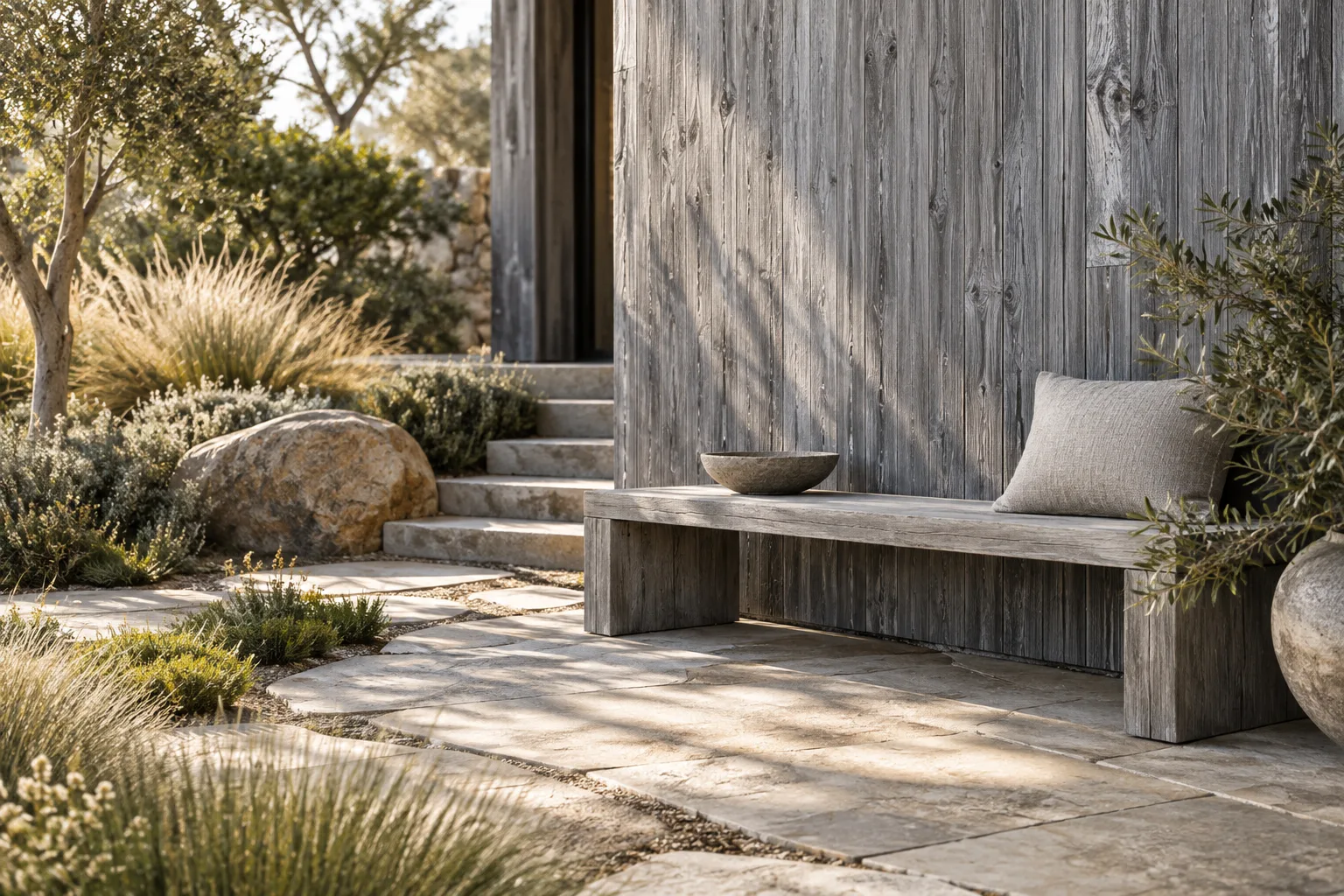
A covered surface is not necessarily an unchanged surface.
Draw the shelter line
Overhang depth, side exposure and reflected light create more than two simple categories of inside and outside. Identify the most protected area, the transition and the fully exposed area. Treat them as separate observation stations rather than averaging the whole wall into one impression.
Keep the history attached
An area revealed by moving furniture may look newer because its exposure history differs. A newly installed replacement may create the same visual contrast for another reason. Record installation and removal events where known. Do not invent dates to make a colour sequence look complete.
Build a realistic appearance brief
For a wall below a deep roof, consider whether variation is acceptable or whether a documented finish approach is needed. Ask to review samples in the actual setting. A catalogue image shot in even light cannot resolve expectations for a wall with a strong shelter gradient.
- Mark protected and exposed stations
- Record changed obstructions
- Review samples in place
Evidence & scope
Surface weathering research (2020), not a forecast for a supplied board or a structural assessment.
Original planning guidance. References support their stated technical scope; examples and workflows do not establish product approval.