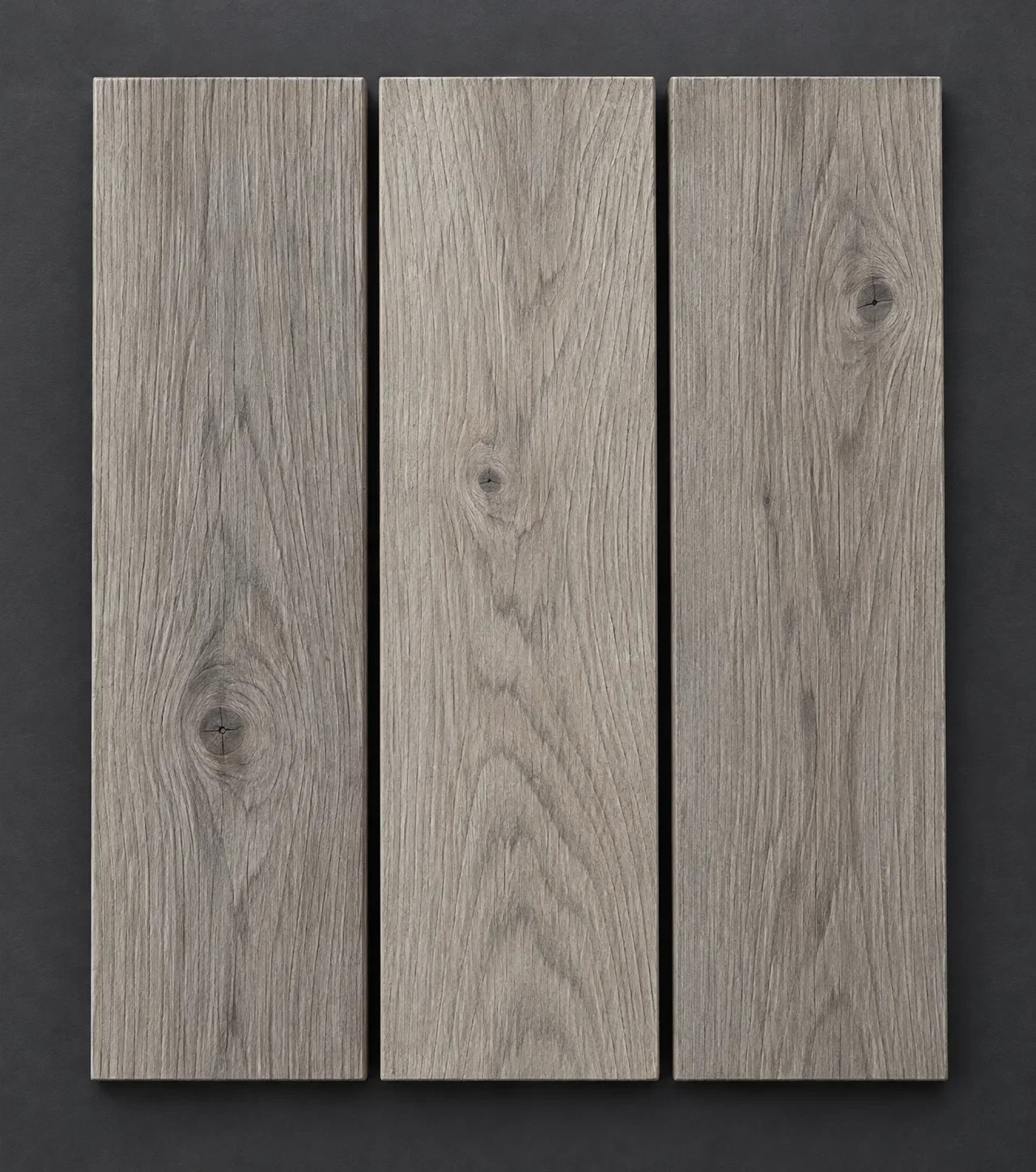
Three gray wood samples under consistent neutral lighting.
Illustrative appearance study, not a dated exposure test. Color does not establish age, strength or decay.Choose an appearance strategy that includes the work it requires.
Write the visual goal
Describe the outcome using representative samples and acceptable variation, not a promise that the whole installation will become one shade. Natural greying and a maintained wood tone are different expectations. A pre-coloured product introduces another starting point that should be documented separately.
Compare responsibilities
Ask who will observe the surface, decide when action is needed and carry out any finish maintenance. USDA finishing guidance explains broad stain categories, but the selected product’s current instructions determine its preparation and application requirements. Do not transfer a maintenance interval from an unrelated finish.
Make the decision reviewable
Record the chosen direction, the sample approved and the questions still open. If a project owner changes their preference later, preserve the original brief. This makes the change a decision about appearance and maintenance rather than a disagreement over an undocumented expectation.
- Choose the visual goal
- Name the maintenance owner
- Keep the approved sample reference
Choose the variation you can live with
Start with the view that matters: the entry wall seen every morning, the fence behind the seating area, or the whole elevation from the street. An owner may welcome a range of grey tones across a long fence yet dislike a sharp colour boundary beside the front door. Those are different appearance requirements, even when both projects use the same wood.
Write down what would count as an unwelcome change. Is it loss of the original brown tone, contrast between sheltered and open areas, visible replacement boards, or variation from board to board? A brief that says only “natural look” leaves all four questions unanswered. Do not use a photograph of one uniformly coloured installation as a guarantee of how another exposure will develop.
Compare the commitment, not just the starting colour
Scroll sideways to read all columns. Keyboard: focus the table and use the arrow keys.
| Decision | Natural greying | Maintained finish |
|---|---|---|
| Appearance goal | Accept an evolving surface and define the range of variation that is acceptable. | Identify the actual product, colour and sample that establish the intended appearance. |
| Sheltered areas | Review the protected and open areas together; do not assume they will match. | Ask how the selected finish will be reviewed across those different exposures. |
| Owner responsibility | Keep observing and caring for the installation; choosing grey does not settle condition or safety questions. | Assign someone to inspect the finish and arrange work under the product instructions. |
| Replacement boards | Decide whether a contrasting new board is acceptable while its appearance changes. | Keep product and preparation records so replacement work can be discussed accurately. |
| Future change of preference | Record the present surface and history before selecting a later treatment. | Check the existing finish and proposed treatment together rather than assuming products can be mixed. |
Review samples in the place they will be seen
Use actual samples of the proposed wood and finish when available. Label each sample with its identity, preparation, finish product and application date. Keep an untreated comparison only if it represents a real option for the project. An unidentified brown offcut cannot serve as a reproducible finish reference.
View the samples beside the adjacent wall, paving and trim, then look from the normal viewing distance. Review them in the sheltered and open parts of the installation. Record the light and whether the surface is wet or dry. These observations help describe an appearance preference; a short sample review is not a long-term weathering test.
Separate the chosen starting appearance from the acceptable later range. If the owner approves a fresh sample but expects its colour to remain unchanged, the brief still needs work. Use the selected manufacturer’s instructions to resolve product-specific preparation and maintenance questions; this comparison does not supply a universal coating schedule.
Worked decision: one fence, two expectations
Fictional planning example: an owner wants the open garden boundary to become grey but wants the small entrance screen to retain a wood tone. Instead of writing “all wood to match”, the project record identifies the garden boundary and entrance screen as separate appearance zones. Each has a sample reference, a named reviewer and an agreed approach to visible variation.
The unresolved question is the transition between the two zones. The owner reviews that junction in place before work proceeds. The record does not promise a date when the garden boundary will become grey, and it does not treat a finish choice as proof of service life.
Save the zone decisions in the appearance brief. Use the exposure planner to identify where the conditions differ and the observation journal to retain the later evidence.
Evidence & scope
General finishing reference (1999). Product instructions and current project conditions take precedence; no service-life figures are adopted.
Original planning guidance. References support their stated technical scope; examples and workflows do not establish product approval.