Appearance studio
Explore an appearance direction
Move between warmer and more muted tones to discuss a visual preference. This is a digital colour study, not a prediction of a wood species or elapsed exposure.
Compare physical samples in the intended setting before choosing a product or finish.
Your tool inputs stay in this browser unless you choose to submit an inquiry with the record attached.
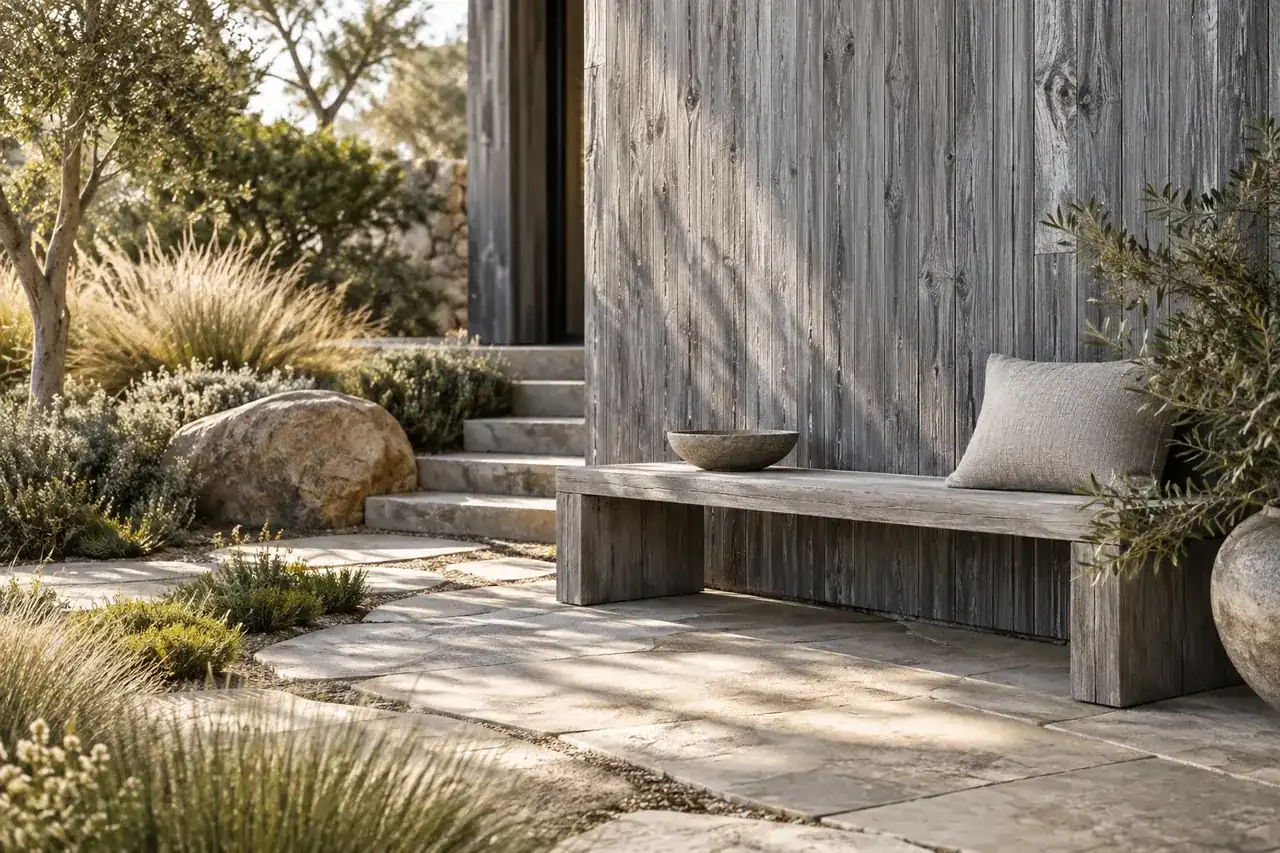
One elevation, three observation zones
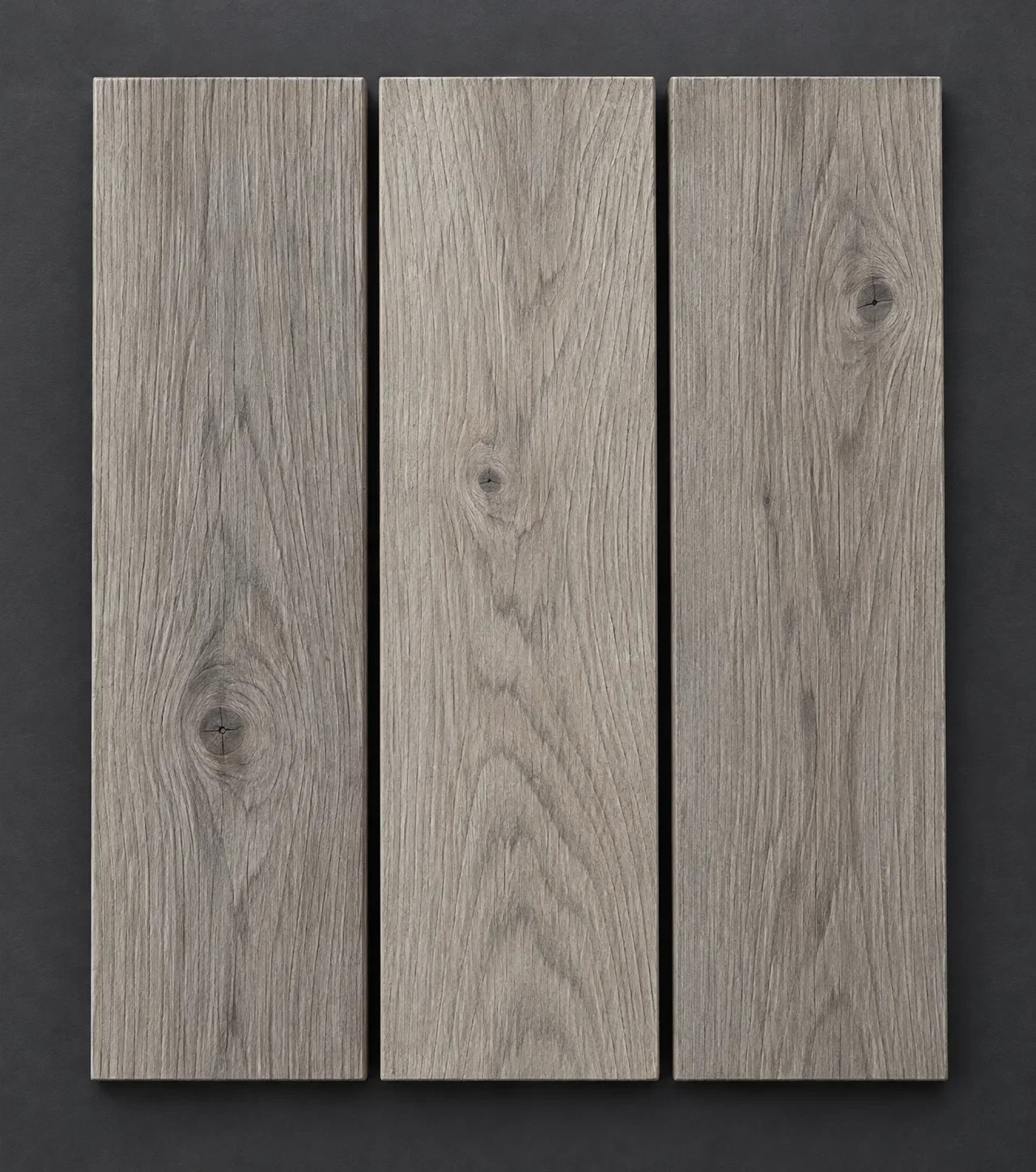 Understand
Why outdoor wood turns gray
Grey is an appearance change, not a complete condition report.
Read / explore ↗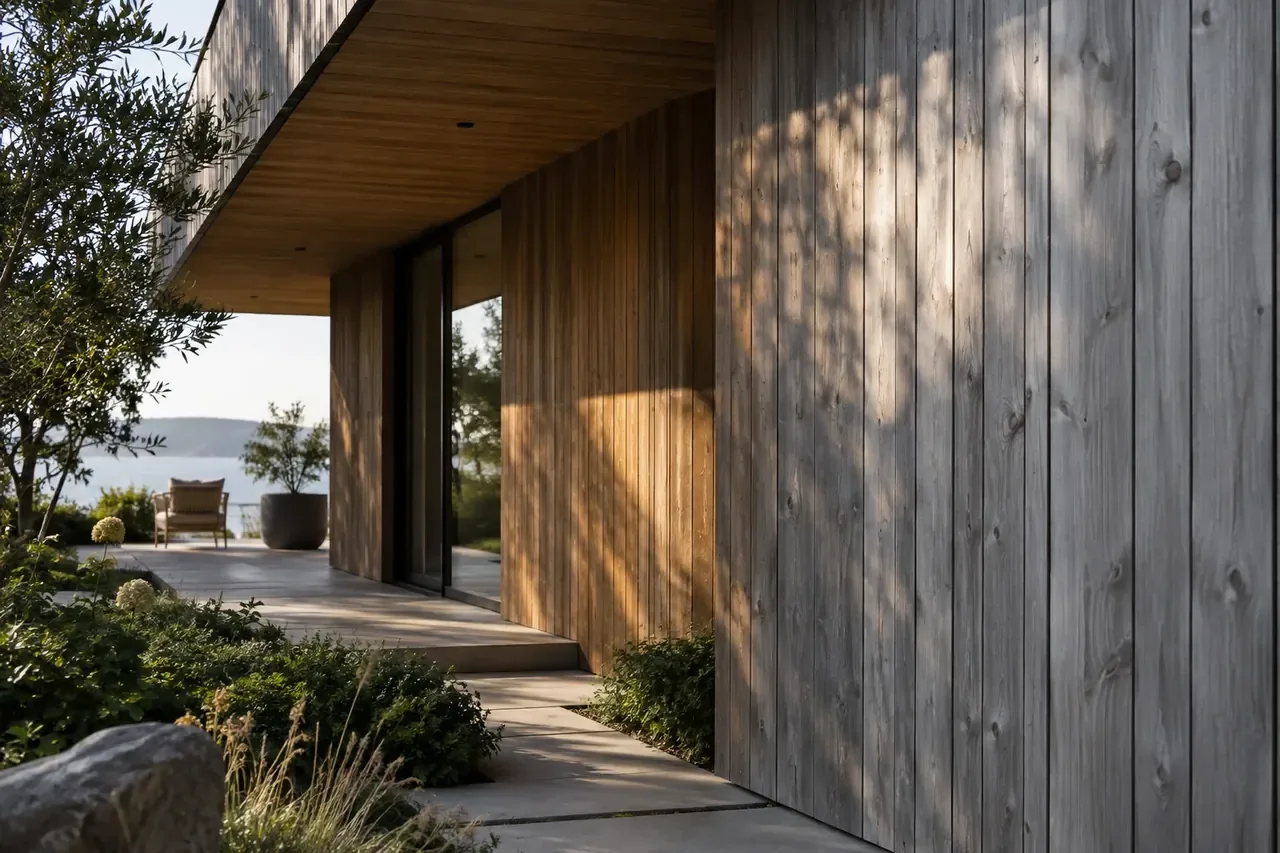 Understand
Why wood weathers unevenly outdoors
Map the pattern before treating the whole surface.
Read / explore ↗ExposureSun, shade and the visible surface
Use site-specific exposure notes rather than a compass label alone.
Read / explore ↗Compare appearance without inventing a weathering clock
Use the studio to discuss surface appearance and exposure conditions. Its visual states are illustrative choices, not observations proving how a particular board will look after a specified period. Record real changes separately in a consistent photo and condition record.
Keep the viewing conditions consistent
When comparing your own photographs, retain the same location and viewing direction where practical. Record whether the surface is wet or dry and whether lighting or previous treatment changed. Those differences can alter appearance without establishing a different material condition.
Separate appearance from condition
A grey surface, a stain and a check are different observations. Color alone does not establish decay, strength or the appropriate treatment. Use the relevant guide to describe the observation and retain unresolved questions rather than assigning a diagnosis from the visual comparison.
Example: shaded and exposed boards
Two areas of the same project appear different. Record their shelter, sunlight, runoff and treatment history before attributing the contrast to species. Photograph both under comparable conditions and keep the exposure differences with the record.