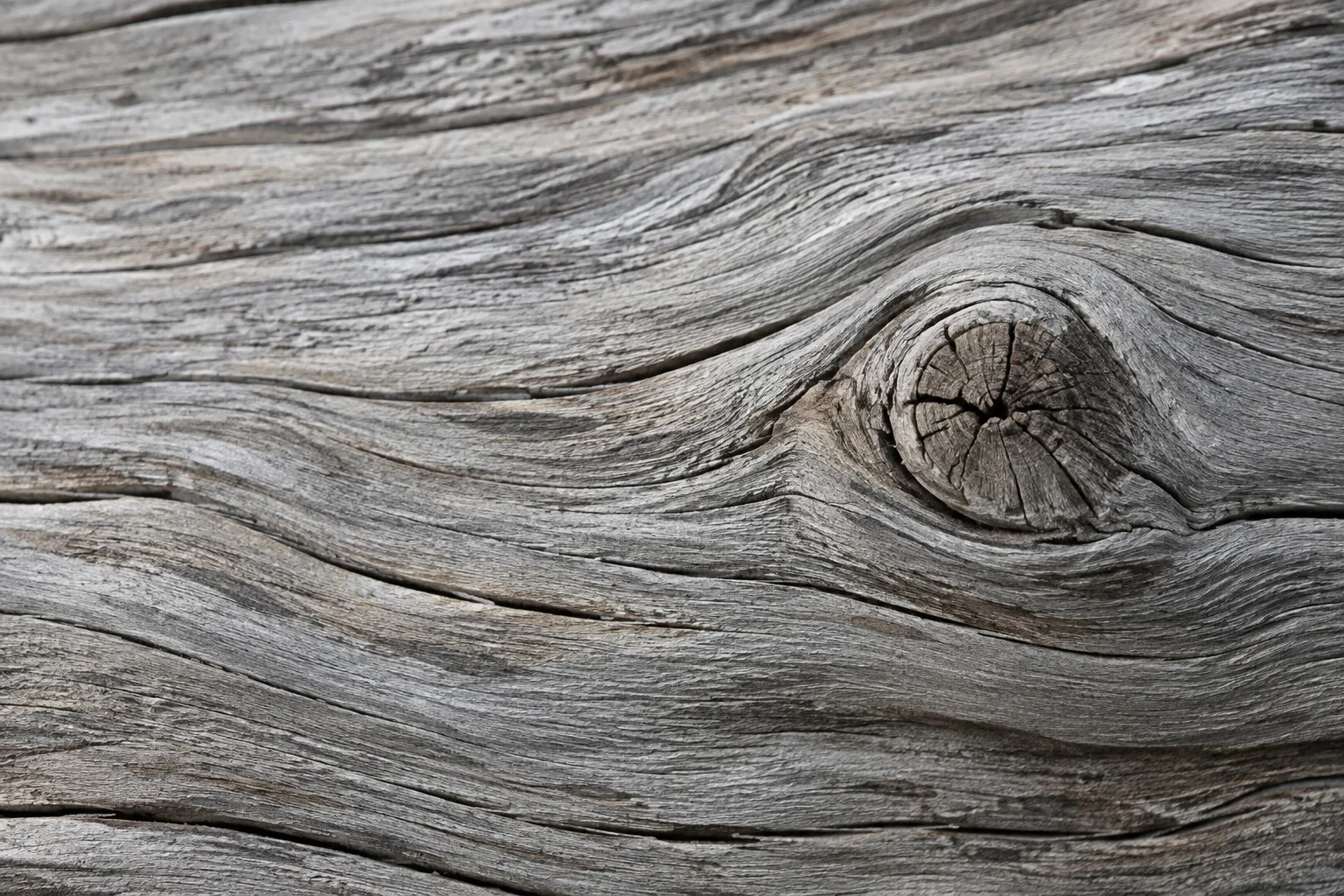
Grey is an appearance change, not a complete condition report.
Start at the surface
Outdoor exposure changes the surface that reflects light. Sunlight and repeated wetting are among the factors discussed in wood-weathering research. The resulting colour is not a universal endpoint: the starting material and its surroundings matter. A shaded board, a rain-washed face and a protected underside can look different even when they belong to one assembly.
Separate appearance from condition
A grey surface does not tell you whether a member is structurally sound, and a brown surface does not prove it is protected. Record colour separately from soft areas, movement, loose connections or persistent wetness. Those observations call for different follow-up and should not disappear inside a single description such as old wood.
Make a useful comparison
For a garden screen, photograph one fixed panel in dry conditions, then repeat from the same position. Include a sheltered location as a reference. You are documenting the site, not estimating its age from colour. A comparison is more informative when the surface condition and camera settings are recorded.
- Identify the face and orientation
- Record finish history if known
- Compare like lighting and wetness
Evidence & scope
Surface weathering research (2020), not a forecast for a supplied board or a structural assessment.
Original planning guidance. References support their stated technical scope; examples and workflows do not establish product approval.