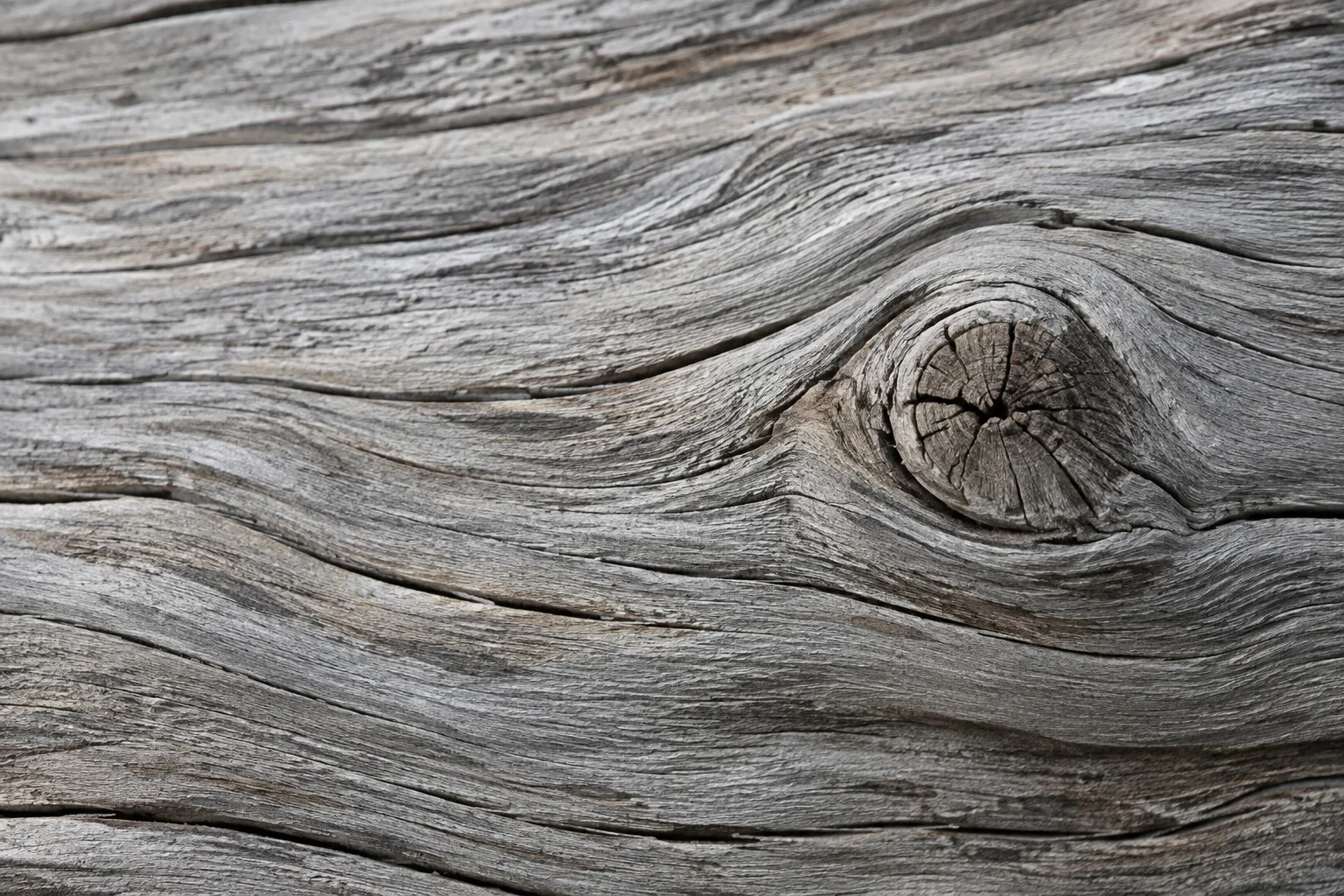
Map the pattern before treating the whole surface.
Read the boundaries
Look for changes that follow an overhang, planter, railing, furniture footprint or water path. Sharp boundaries can be useful clues about exposure history. They do not establish one cause by themselves: an old coating or replaced board can create another boundary that appears similar from a distance.
Document sheltered and exposed zones
Give the zones names that another person can find. Record whether each receives direct rain and whether the observations were made while dry. The independent weathering review discusses light, wetting and exposure as interacting variables. Compare sheltered and exposed zones without assigning a fixed weathering timetable.
Decide what uniform means
A homeowner expecting a single silver tone across a partly roofed terrace may need to revise the appearance brief. Compare alternatives using representative samples and accept that differently exposed areas may remain distinct. Do not repeatedly treat one patch until a colour photograph happens to match another.
- Sketch overhangs and splash zones
- Locate prior replacements
- Agree an appearance reference
Evidence & scope
Surface weathering research (2020), not a forecast for a supplied board or a structural assessment.
Original planning guidance. References support their stated technical scope; examples and workflows do not establish product approval.