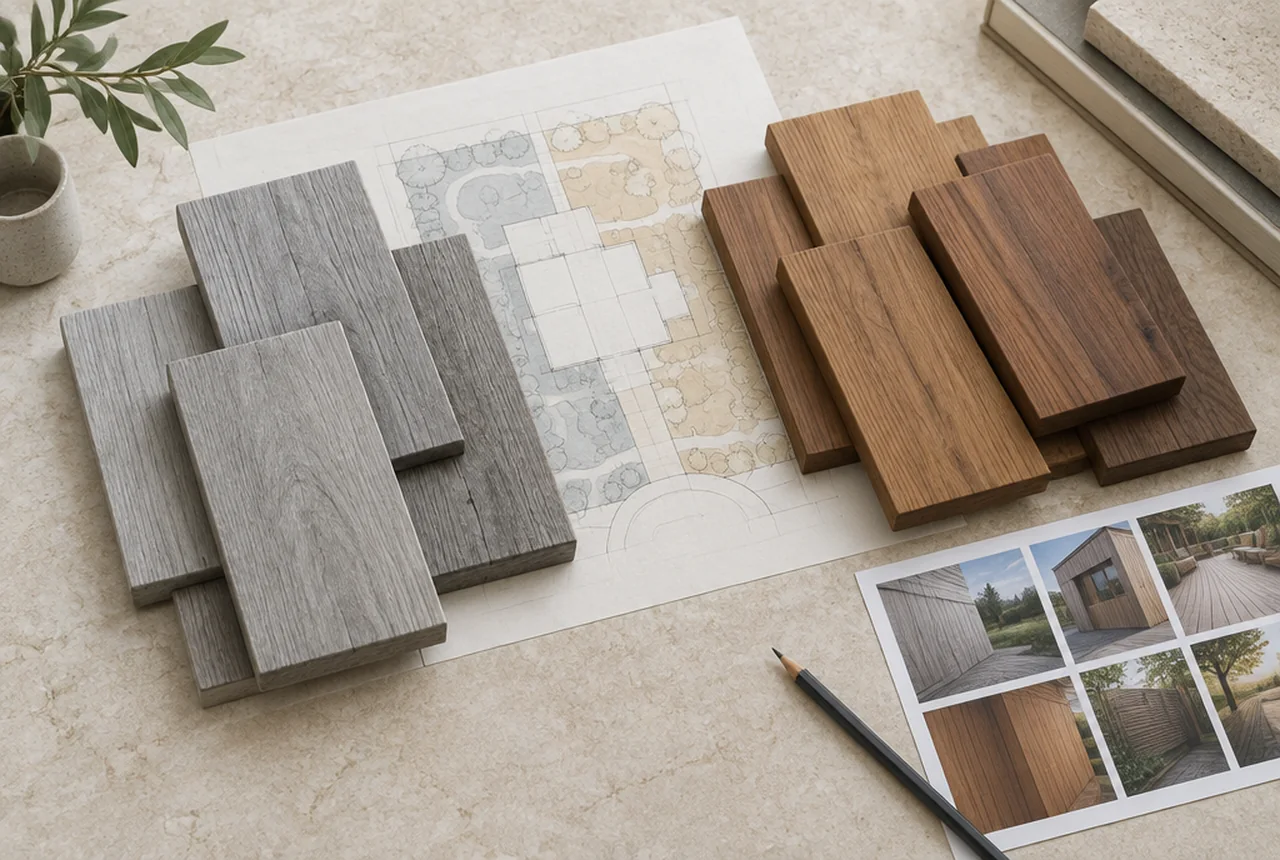
Record the appearance preference for each project zone, with samples and references identified.
Generated illustrative planning scene. The samples and reference photographs do not document a real project, product identity or observed weathering performance.Give the supplier a visual goal and the conditions it must address.
Describe the setting
Name the application, orientation, sheltered zones and known water sources. Include product identity and finish history where documented. Attach a concise set of representative views rather than a large collection without locations. Leave unknown entries unresolved instead of filling them with a plausible guess.
Define the goal
State whether you prefer natural colour change, a maintained tone or a factory-defined appearance. Reference the sample or photograph used to communicate that preference. Make clear whether it is the supplied material, a comparable example or design inspiration.
Assign the follow-up
List the questions needing product documentation, a sample or a professional review. A material inquiry is a request for information, not an approved finish schedule or order. Keep your own copy of the brief, and review any proposed product against its current documentation before proceeding.
- Record application and exposure
- Identify the reference image or sample
- List unresolved questions
Separate the starting appearance from the long-term preference
An owner can like a fresh sample and still prefer to let the installed wood change naturally. Record both decisions. “Match this sample at delivery” and “retain this colour in service” are different requests. If the second matters, ask what documented care programme the proposed product requires and whether the owner is willing to carry it out.
Avoid making a photograph the entire specification. Identify what you like about it: colour family, variation between boards, visible grain, sheen or the relationship to adjacent materials. Identify what the photograph cannot establish, including its lighting, editing, product identity, exposure and maintenance history. An illustration is a design reference, not a dated performance record.
Write the brief by visible zone
Use the same zone names on your plan, photographs and observations. A sheltered wall beneath an overhang and a fully exposed boundary should not disappear into one entry called “exterior wood.” Record known conditions and leave the rest as questions. The purpose is to make the supplier’s response specific enough to review.
Scroll sideways to read all columns. Keyboard: focus the table and use the arrow keys.
| Field | What to record | Question the record should answer |
|---|---|---|
| Zone | Plan reference and representative view | Where does this preference apply? |
| Material | Exact product reference if known; otherwise unresolved | What sample or documentation describes the proposal? |
| Appearance | Starting preference and acceptable variation | Must the colour be maintained, or is change acceptable? |
| Exposure | Orientation, shelter and known wetting sources | Does the response address this part of the project? |
| Care | Access, responsible person and agreed willingness to maintain | Is the proposed care routine practical? |
| Evidence | Sample identifier, dated photographs and document references | Which statements are observed, documented or illustrative? |
| Open item | Specific question, responsible party and response needed | What prevents a decision? |
Worked brief: one property, two appearance expectations
Consider a fictional project with an exposed fence and a sheltered entrance lining. The owner accepts visible colour change at the fence but wants to discuss maintaining a warmer tone at the entrance. That is a useful starting brief; “all timber to look the same forever” is not a resolved product requirement.
Give each zone its own reference sample and care question. Ask the supplier to identify the proposed material and finish, provide the applicable instructions, and explain what the submitted examples actually represent. If no documented long-term example exists for the proposal, keep that limitation visible. Do not substitute a generated image for missing observation.
The response may reveal a trade-off the owner needs to decide: accept greater visual variation, change the appearance preference, or adopt a documented maintenance approach. Record the decision and its basis. This example does not predict how either zone will look after a particular number of years.
Compare the response with the brief before accepting it
Mark each answer against the corresponding zone and question. A general brochure may explain a product without answering whether the proposed care routine can be performed at your location. A sample may establish a current appearance without documenting its future change. Ask for the missing answer rather than treating the presence of an attachment as completion.
- Does the response identify the exact proposed material and finish?
- Are supplied samples and photographs labeled with their relevant condition and limitations?
- Is the owner’s tolerance for variation recorded separately from the starting colour?
- Can the responsible person access the surface and follow the documented care instructions?
- Are unresolved questions still visible, with a named next action?
Keep the accepted brief, the response and later revisions together. When appearance is reviewed after installation, compare observations with the recorded expectation and conditions. Use the observation journal for dated records; a disagreement about colour should not erase the original decision trail.
Evidence & scope
General finishing reference (1999). Product instructions and current project conditions take precedence; no service-life figures are adopted.
Original planning guidance. References support their stated technical scope; examples and workflows do not establish product approval.