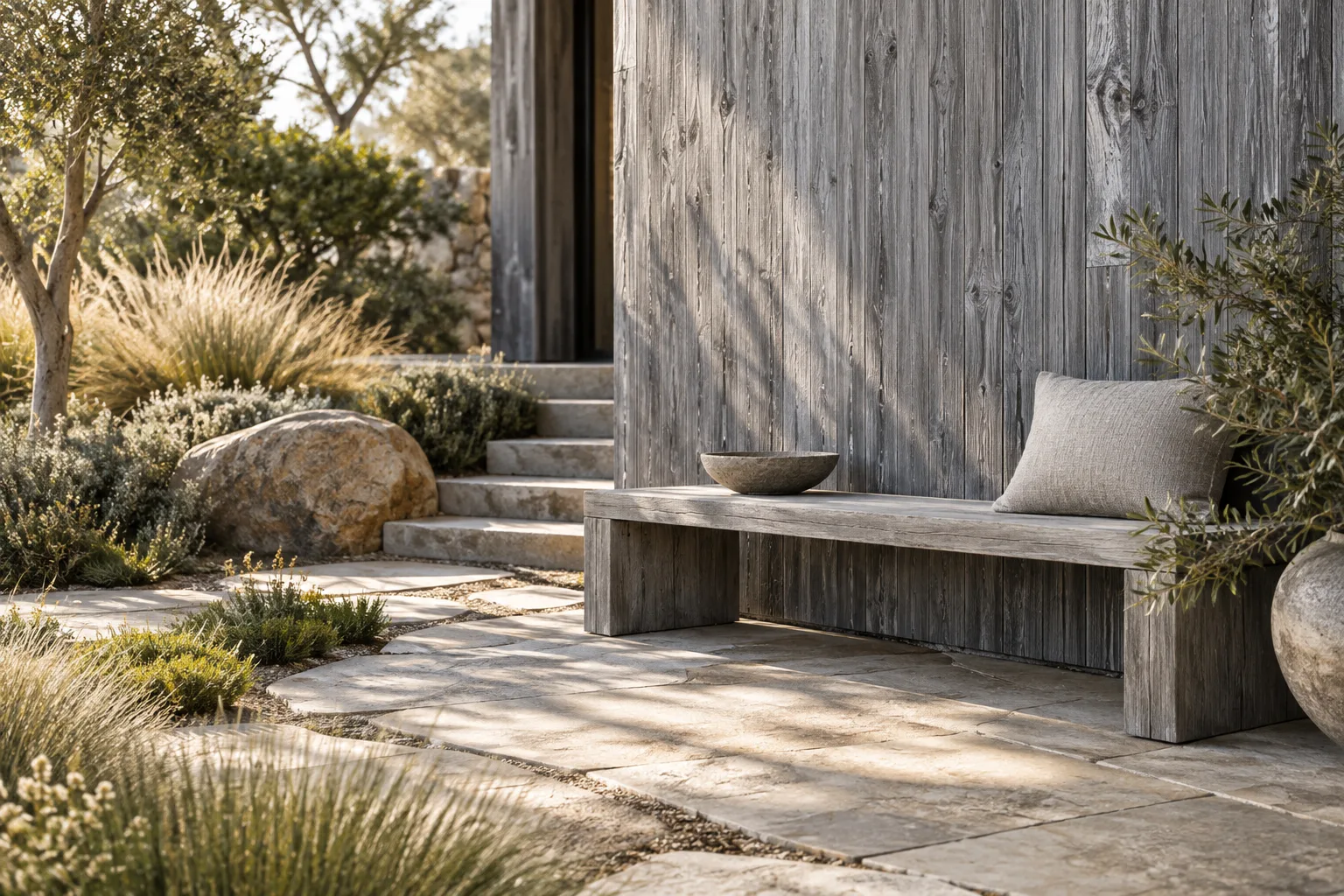
Follow the water path before interpreting a mark.
Record where water arrives
Differentiate direct rainfall, concentrated roof runoff, irrigation and splash from adjacent paving. A photograph taken after rain can show a path that is invisible when dry. Keep that wet-condition image, but do not compare its colour directly with a dry reference as though the difference measures weathering.
Trace the boundaries safely
From an accessible position, note whether staining aligns with an edge, fixing, joint or object above it. Do not remove components or enter an unsafe area to complete the record. The purpose is to provide useful context for inspection, not to diagnose hidden drainage performance from the face alone.
Discuss the source before the finish
If a downpipe or sprinkler repeatedly wets the same boards, record that condition before discussing cosmetic treatment. A finish decision without the water-path context may address appearance while leaving the underlying exposure unchanged. Ask the responsible installer to review assembly details when needed.
- Name the water source
- Record wet and dry views separately
- Flag persistent moisture for review
Evidence & scope
Surface weathering research (2020), not a forecast for a supplied board or a structural assessment.
Original planning guidance. References support their stated technical scope; examples and workflows do not establish product approval.