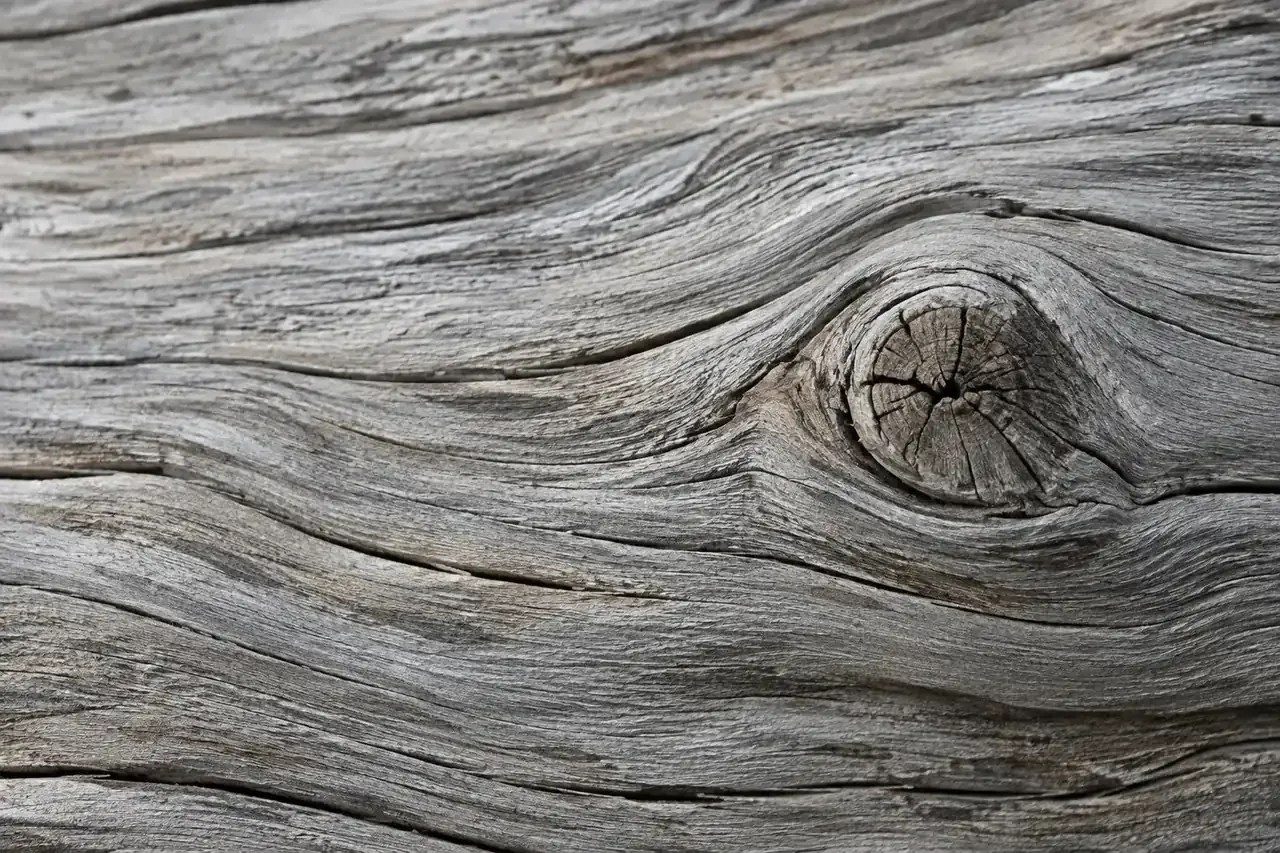
Close view of a wood surface and its visible texture.
Illustrative appearance study, not a dated exposure test. Color does not establish age, strength or decay.Surface appearance cannot clear a structural concern.
Keep the scope narrow
This reference concerns visible appearance and exposure observations. A silver surface is not a pass or fail condition for structural use. Do not use its photographs, colour comparisons or generated scenes to decide whether hidden material is sound.
Recognize the limits of a visual record
Photographs can help locate a concern, but they cannot establish internal condition, connection capacity or an assembly’s safety. Softness, unexpected movement or other suspected deterioration deserves the appropriate professional assessment. Do not create an unsafe test to gather more information.
Use the right handoff
Provide the location, access limitations, relevant photographs and what you actually observed. Ask the responsible professional to define any further inspection. The appearance journal can organize the record, but it must not be represented as an inspection certificate or engineering report.
- State the observed concern
- Avoid destructive investigation
- Obtain project-specific assessment
Two questions, two kinds of evidence
“Why has this board changed colour?” and “Is this assembly fit to use?” are different questions. An appearance record can help answer the first and locate a concern for the second. It cannot replace a condition assessment. Keep two fields in your notes: what changed visually, and what you observed about the surrounding condition. Do not combine them into a verdict such as “grey, therefore rotten” or “still brown, therefore sound.”
The USDA Wood Handbook chapter on biodeterioration distinguishes molds, stains and decay and describes the environmental conditions needed by fungi. These categories should not be treated as interchangeable descriptions of a dark or discoloured surface. This guide uses that distinction to organize observations; it does not identify organisms or determine remaining strength.
Write observations that another person can check
Use location and comparison instead of a diagnosis. “Dark band along the lower edge of panel C, photographed after rain” is a useful entry. “Panel C is rotting” adds a conclusion that the photograph does not establish. Record whether the same area looked different when dry, whether the change is on the exposed face or at a joint, and whether the underside was accessible. Write “not inspected” for a hidden face rather than leaving the field blank.
Scroll sideways to read all columns. Keyboard: focus the table and use the arrow keys.
| Observation | Record alongside it | What it does not establish |
|---|---|---|
| Broad colour change across exposed faces | Same viewpoint, dry/wet state and protected comparison area | Internal condition or remaining service life |
| Local dark area near a joint | Exact joint, nearby drainage path and date | Cause of the mark or confirmation of decay |
| Area still visibly wet when adjacent areas look dry | Weather history and whether the observation repeats | A moisture-content measurement or a diagnosis |
| Unexpected movement, softness already noticed, or material loss | Location, extent visible from safe access and who was notified | Safe load capacity or permission to continue use |
| Face concealed by trim or another member | Access limitation and which surfaces remain unseen | Evidence that the concealed area is sound |
Do not pry, probe, bounce on, or remove parts of an assembly to fill in this record. If a condition may affect safe use, stop treating the task as a colour comparison and obtain an appropriate assessment. Further access and testing belong in the assessor’s scope, not in an improvised appearance check.
A worked example: one fence, two records
Fictional example: the open garden face of a fence has become evenly silver, while a small area near a planter remains dark. The owner creates an appearance entry for the broad colour change and a separate location entry for the dark area. Both photographs include the panel identifier. The notes say when it last rained and that the back of the panel was not accessible.
The owner can use the broad colour record when deciding whether the natural-weathering appearance suits the garden. The local mark remains an unresolved observation. The next question is whether its location and surrounding conditions need assessment—not which stain colour would hide it. Nothing in the two photographs proves decay, rules it out, or approves a repair.
Keep any later professional findings beside the original observations, with their date and author. Do not rewrite an earlier visual note to make it sound like a diagnosis that was known at the time. This preserves a useful sequence: observed change, question raised, assessment received, and action taken.
Hand off the concern without losing the appearance history
A useful handoff contains a wide view that locates the area, a closer view of the visible change, a short description in plain language, dates, weather context and access limitations. Include any previous work you know about, such as a planter being moved or a finish being applied. Mark unknown history as unknown. Avoid estimating age or treatment from colour alone.
Use the observation journal for repeatable records and the exposure planner to distinguish sheltered and exposed zones. Once a condition concern is resolved, return to the appearance brief for the separate question of the finish or weathered appearance you want. A colour target should never silently close an unresolved condition question.
Evidence & scope
Surface weathering research (2020), not a forecast for a supplied board or a structural assessment.
Distinction between molds, stains and decay and general fungal growth conditions. Not a diagnosis or structural assessment of a supplied board.
Original planning guidance. References support their stated technical scope; examples and workflows do not establish product approval.